
Description
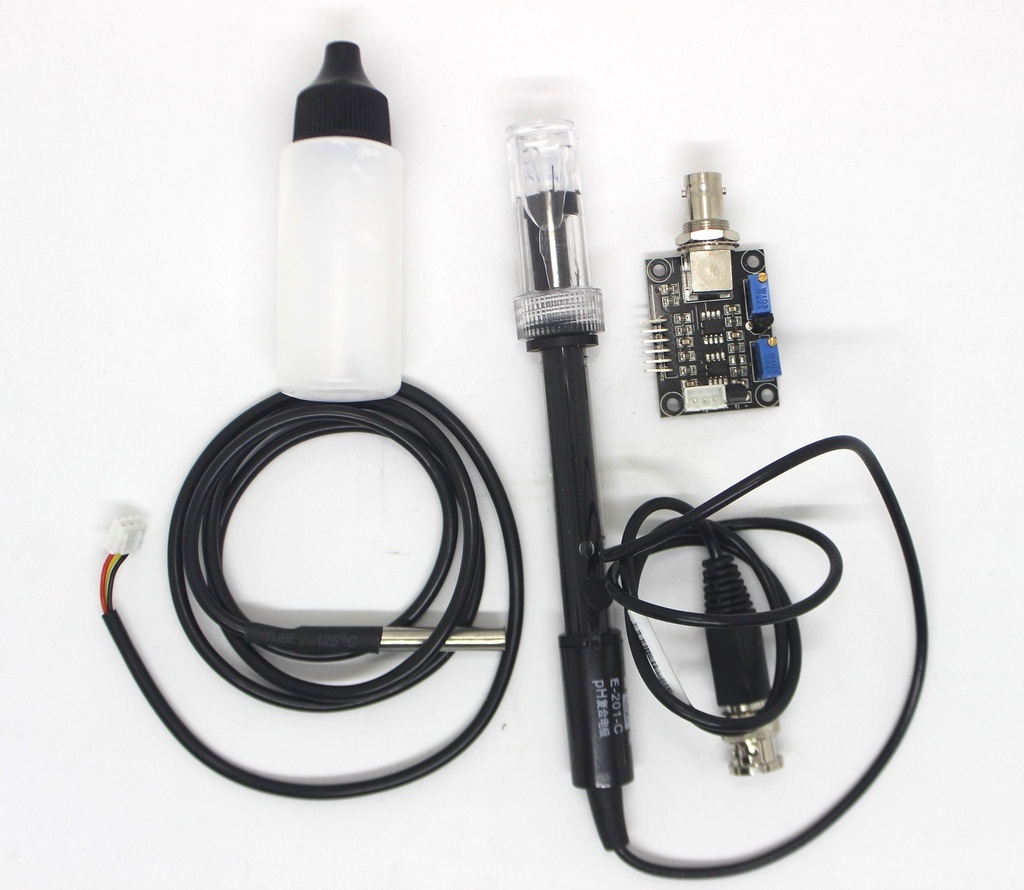
A liquid pH sensor (composite electrode) is a precision device used to measure the acidity or alkalinity (pH) of aqueous solutions. It combines a glass pH sensing electrode with a silver/silver chloride reference electrode into a single probe, ensuring stable and accurate measurements.
Key Features
- Wide Measurement Range: 0–14 pH
- Integrated Design: Glass electrode + reference electrode
- High Sensitivity: Fast response and stable readings
- Low Noise & High Repeatability
- Durable, Chemical-Resistant Construction
- Compatible with Standard pH Meters (BNC connection)
Specification
- Measurement Range: 0–14 pH
- Temperature Range: 0–80°C
- Zero Point: 7 ± 0.5 pH
- Alkaline Error: <15 mV
- Slope (PTS): >98%
- Response Time: <2 minutes
- Internal Resistance: <250 MΩ
- Repeatability: <0.017 pH
- Noise: <0.5 mV
Application
- Water quality monitoring (aquariums, pools, wastewater)
- Industrial chemical processing
- Laboratory testing and research
- Agriculture (soil and irrigation analysis)
- Food & beverage production
Usage & Maintenance
- Soak before use: Immerse the electrode in 3N KCl solution for at least 8 hours before first use or after long storage
- Keep the electrode clean and dry when not in use
- Avoid cross-contamination between samples
- Calibrate regularly for accurate readings
- Do not store dry or in distilled water
- Avoid prolonged exposure to strong acids or alkaline solutions
-
Remove the protective cap and open the filling port during use to maintain proper electrolyte flow