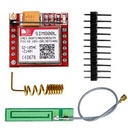

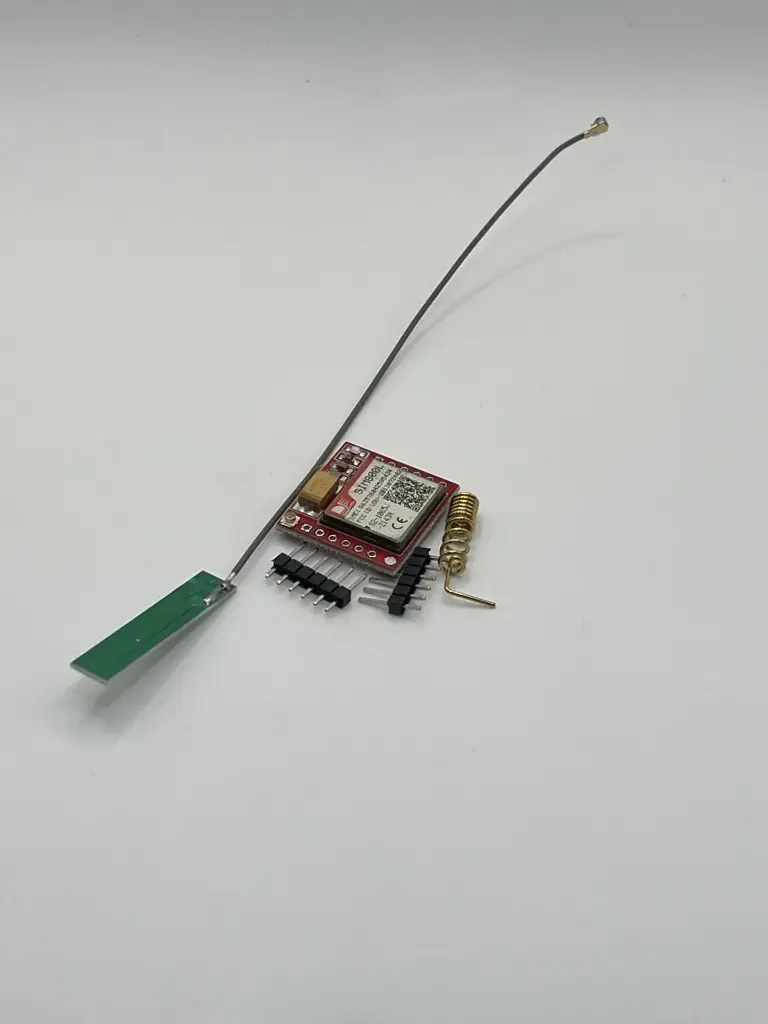
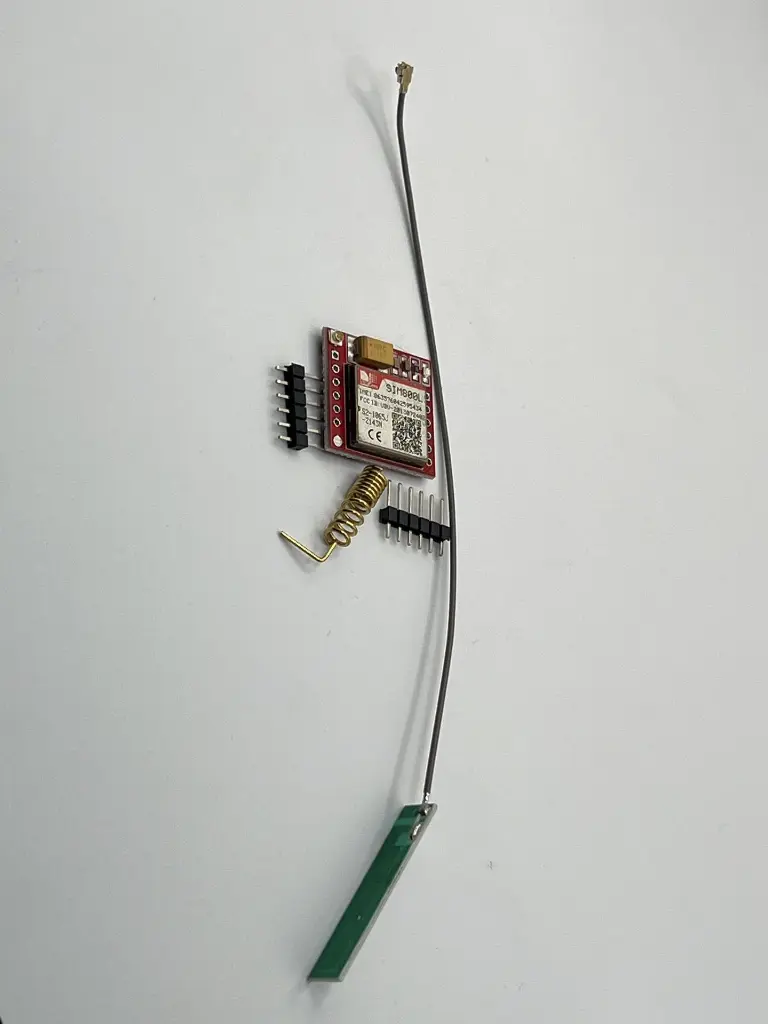
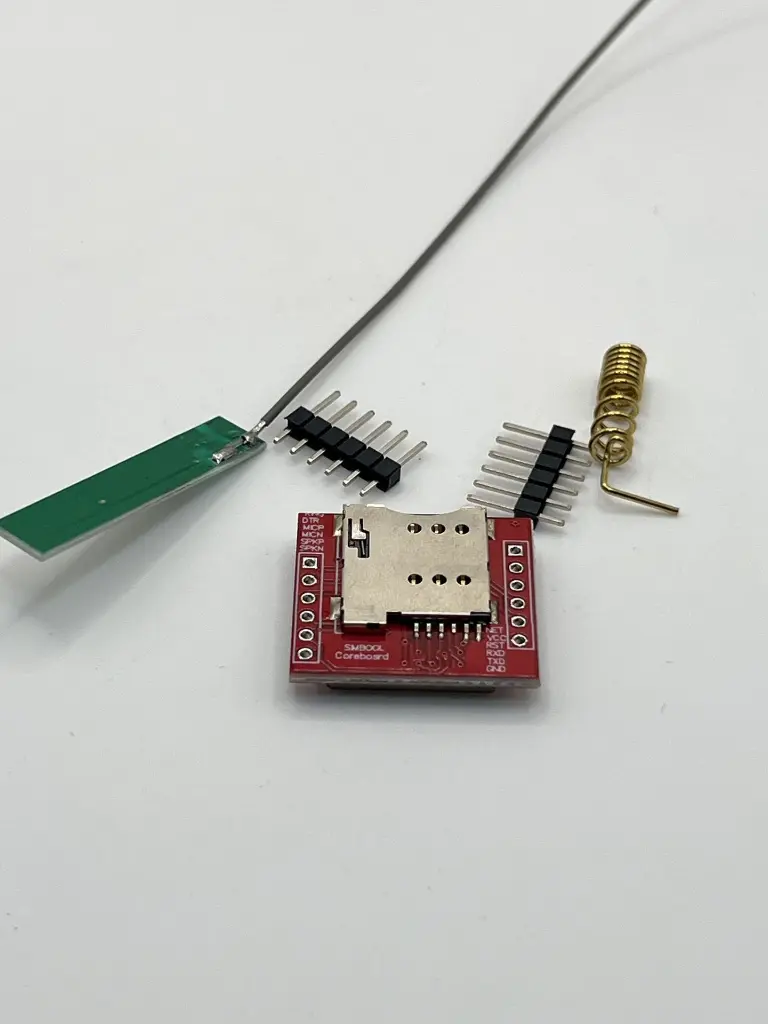
Description
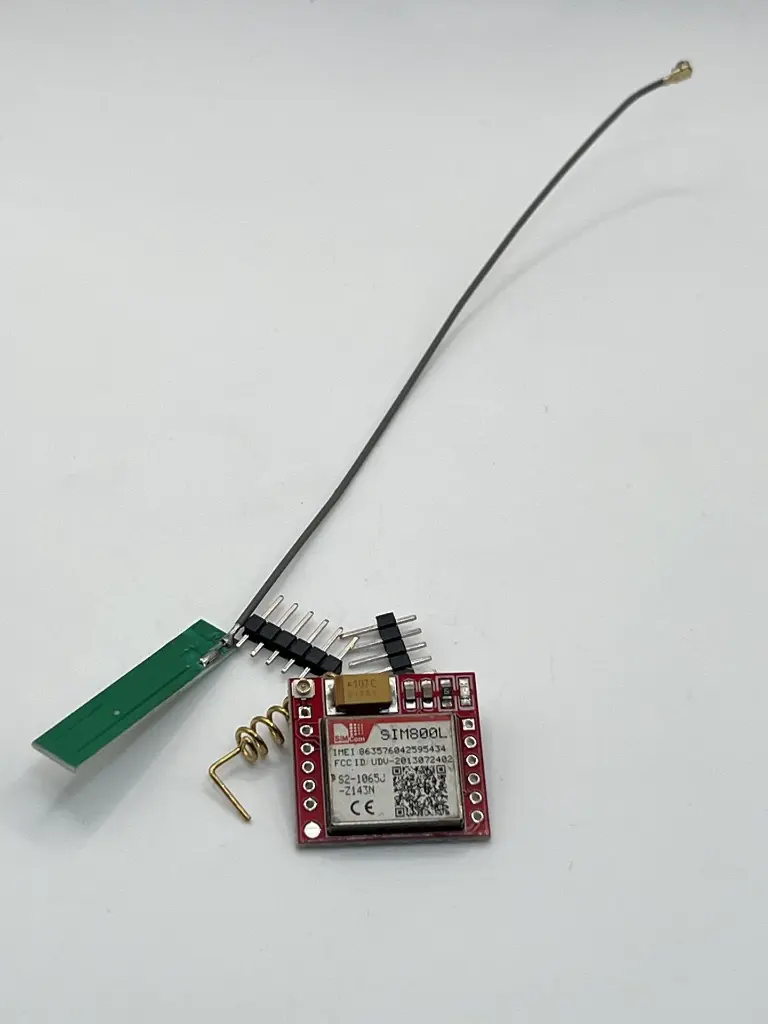
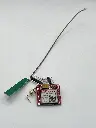
The SIM800L is a compact and versatile GSM/GPRS module designed for cellular communication. It allows devices to send and receive SMS messages, make and receive voice calls, and access the internet via GPRS. Its small size, low power consumption, and wide frequency support make it ideal for IoT projects, remote monitoring, mobile communication, and SMS-based control systems.
Key Features
- GSM/GPRS Connectivity: Supports voice, SMS, and data communication
- Global Frequency Support: GSM 850/900/1800/1900 MHz for worldwide compatibility
- Antenna Options: Integrated or external antenna support depending on module variant
- Simple AT Command Interface: Easy configuration and control via UART
- Low Power Consumption: Multiple power-saving modes for energy efficiency
- Compact Size: Lightweight and easy to integrate into projects
Specification
- Frequency Bands: GSM 850/900/1800/1900 MHz
- GPRS: Class 10, up to 85.6 kbps download and upload
- Operating Voltage: 3.4V – 4.4V (recommended 4.0V)
- Power Consumption: Idle 20 mA, Peak up to 2A during transmission
- Communication Interface: Serial UART (TX/RX) for AT command communication
- Operating Temperature: -40°C to +85°C
- Antenna: Integrated or external support depending on module variant
- Dimensions: ~25mm × 23mm × 3mm (may vary by manufacturer)
Application
- IoT (Internet of Things) devices
- Remote monitoring and control systems
- SMS-based applications
- GSM/GPRS-based data communication
- Voice communication applications
Usage:
- Power the Module: Connect to a stable power supply within the recommended voltage range.
- Connect to a Microcontroller: Use UART to connect the SIM800L to an Arduino, ESP32, or other development board.
- Insert SIM Card: Place a compatible SIM card into the SIM slot.
- Send AT Commands: Configure the module, send SMS, make calls, or connect to GPRS using AT commands.
- Integrate Antenna: Attach external antenna (if required) to ensure proper signal reception.
Caution:
- Ensure correct voltage regulation to prevent module damage.
- Use a high-quality antenna for optimal signal strength and reliability.
- Follow manufacturer guidelines for handling and connections to maintain performance and prevent damage.
Datasheet: For detailed technical specifications, refer to the SIM800L Datasheet.